
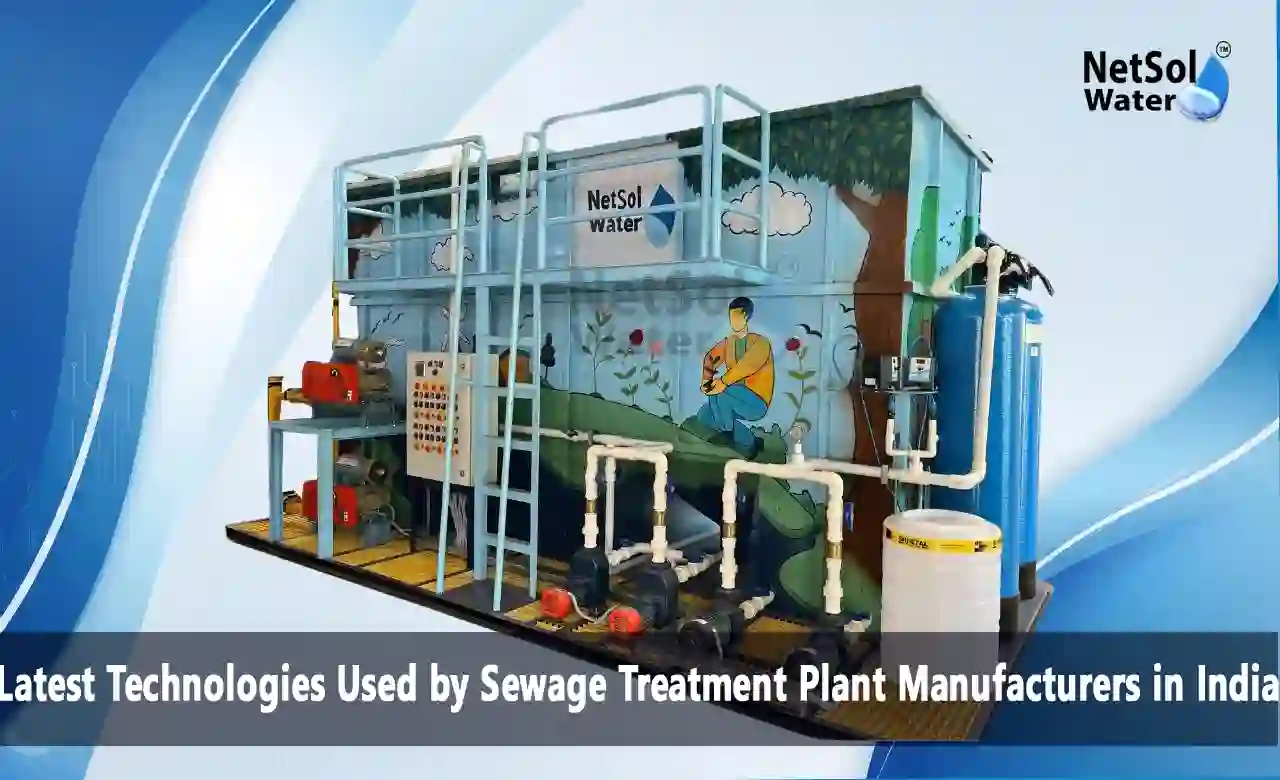
India’s rapid urbanization, industrial expansion, and growing environmental concerns have significantly increased the demand for efficient wastewater treatment systems. Today, every leading NetSol Water and other Sewage Treatment Plant Manufacturer in India are adopting advanced technologies to deliver high-performance, eco-friendly, and energy-efficient sewage treatment solutions.
Modern sewage treatment plants are no longer limited to basic filtration and sludge removal. Advanced automation, smart monitoring systems, membrane technologies, and biological treatment processes have transformed the wastewater treatment industry. Businesses, residential complexes, hospitals, hotels, educational institutions, and industries now demand high-quality treated water that can be reused for flushing, gardening, cooling towers, and industrial applications.
This article explores the latest technologies used by Sewage Treatment Plant Manufacturers in India and explains how these innovations are improving treatment efficiency, reducing operational costs, and supporting sustainable water management.
Importance of Advanced Sewage Treatment Technologies
Traditional sewage treatment systems often faced challenges such as:
- High electricity consumption
- Large space requirements
- Poor treatment efficiency
- Odour problems
- High sludge generation
- Difficulty in meeting pollution control norms
To overcome these issues, modern Sewage Treatment Plant Manufacturer in India companies are integrating innovative technologies that offer:
- Better water quality
- Compact plant design
- Lower maintenance costs
- Automation and remote monitoring
- Energy efficiency
- Reduced environmental impact
These advanced systems also help industries and commercial establishments comply with CPCB and SPCB regulations.
1. Moving Bed Biofilm Reactor (MBBR) Technology
MBBR technology is one of the most widely used sewage treatment processes in India today. In this system, specially designed bio-media carriers float inside the aeration tank and support the growth of beneficial microorganisms.
These microorganisms break down organic pollutants effectively, resulting in superior wastewater treatment.
Benefits of MBBR Technology
- High treatment efficiency
- Compact plant size
- Low sludge production
- Easy operation and maintenance
- Excellent BOD and COD removal
- Suitable for residential and commercial applications
Most modern Sewage Treatment Plant Manufacturer in India companies prefer MBBR technology because it performs efficiently even under fluctuating sewage loads.
2. Membrane Bioreactor (MBR) Technology
MBR technology combines biological treatment with membrane filtration. It is considered one of the most advanced sewage treatment methods available today.
In this process, ultrafiltration membranes separate suspended solids, bacteria, and contaminants from treated water, producing exceptionally high-quality output water.
Advantages of MBR Systems
- Superior treated water quality
- Suitable for water reuse applications
- Very low footprint requirement
- Minimal sludge generation
- High automation capability
- Effective pathogen removal
Hotels, hospitals, IT parks, malls, and high-rise buildings increasingly prefer MBR-based sewage treatment plants because of their compact design and water recycling capabilities.
3. Sequential Batch Reactor (SBR) Technology
SBR technology is gaining popularity among every major Sewage Treatment Plant Manufacturer in India because it performs multiple treatment processes within a single tank.
The system treats wastewater in batches through different stages such as filling, aeration, settling, and discharge.
Key Features of SBR Technology
- High-quality treated water
- Reduced space requirement
- Lower operational costs
- Excellent nutrient removal
- Automated process control
SBR plants are commonly installed in municipal projects, residential societies, and commercial establishments.
4. Internet of Things (IoT) and Smart Automation
Modern sewage treatment plants are becoming smarter with IoT-enabled monitoring systems and automation technologies.
Advanced sensors continuously monitor:
- pH levels
- Dissolved oxygen
- Flow rate
- Turbidity
- Water quality parameters
- Equipment performance
Real-time monitoring allows operators to detect faults instantly and optimize plant performance remotely.
Benefits of Smart STP Automation
- Reduced human intervention
- Improved operational efficiency
- Lower downtime
- Preventive maintenance alerts
- Energy optimization
- Remote plant management
Leading Sewage Treatment Plant Manufacturer in India companies are integrating SCADA and PLC systems to provide fully automated operations.
5. Ultrafiltration (UF) Systems
Ultrafiltration technology is widely used as a polishing treatment stage after biological treatment.
UF membranes remove:
- Suspended particles
- Bacteria
- Viruses
- Colloidal impurities
The treated water becomes suitable for reuse in flushing, gardening, cooling towers, and industrial applications.
Why UF Systems Are Popular
- High filtration accuracy
- Compact design
- Consistent water quality
- Low chemical usage
- Enhanced recycling capability
Many industries now combine UF systems with RO plants for complete wastewater recycling solutions.
6. Reverse Osmosis (RO) Integration
Modern Sewage Treatment Plant Manufacturer in India companies often integrate RO systems with sewage treatment plants to achieve high-purity water recovery.
RO technology removes dissolved salts, heavy metals, and microscopic contaminants from treated wastewater.
Applications of RO-Treated Water
- Boiler feed water
- Cooling towers
- Industrial processing
- Landscaping
- Process water reuse
This integration supports Zero Liquid Discharge (ZLD) objectives and helps industries reduce freshwater consumption significantly.
7. Anaerobic Digestion Technology
Anaerobic treatment processes are becoming increasingly important for sustainable sewage management.
In anaerobic digestion systems, microorganisms break down organic matter in the absence of oxygen and produce biogas.
Advantages of Anaerobic Systems
- Energy generation through biogas
- Lower energy consumption
- Reduced sludge production
- Sustainable waste management
- Cost-effective operation
Large municipal and industrial treatment plants are adopting anaerobic digesters to improve energy efficiency and reduce operating expenses.
8. Decentralized Sewage Treatment Systems (DEWATS)
Decentralized wastewater treatment systems are designed for locations where centralized sewer networks are unavailable.
These systems are ideal for:
- Rural areas
- Small communities
- Resorts
- Educational campuses
- Housing societies
Benefits of DEWATS
- Low operational cost
- Minimal electricity requirement
- Eco-friendly treatment
- Easy maintenance
- Local wastewater reuse
Many Sewage Treatment Plant Manufacturer in India companies now offer modular decentralized treatment solutions for sustainable wastewater management.
9. Advanced Sludge Management Technologies
Sludge management is a critical aspect of sewage treatment. Modern STPs use advanced sludge dewatering and handling systems to minimize waste disposal challenges.
Popular sludge management technologies include:
- Filter press systems
- Screw press dewatering
- Sludge drying beds
- Mechanical thickening systems
These technologies help reduce sludge volume and disposal costs while improving operational efficiency.
10. Energy-Efficient Blowers and Aeration Systems
Aeration is one of the most energy-consuming operations in sewage treatment plants. To reduce power consumption, modern manufacturers use:
- Fine bubble diffusers
- Turbo blowers
- Variable Frequency Drives (VFDs)
- Energy-efficient aeration systems
Benefits
- Lower electricity bills
- Improved oxygen transfer efficiency
- Reduced carbon footprint
- Better biological treatment performance
Energy optimization is now a major focus area for every leading Sewage Treatment Plant Manufacturer in India.
Role of AI and Data Analytics in Sewage Treatment
Artificial Intelligence and data analytics are emerging as game-changing technologies in wastewater treatment.
AI-based systems can:
- Predict equipment failure
- Optimize chemical dosing
- Reduce energy consumption
- Analyze operational trends
- Improve plant efficiency
With predictive maintenance and automated decision-making, STP operations are becoming more reliable and cost-effective.
Why Businesses Prefer Modern Sewage Treatment Plants
Businesses and institutions are increasingly investing in advanced sewage treatment systems because they offer:
- Compliance with environmental regulations
- Reduced water bills through recycling
- Sustainable brand image
- Lower operating costs
- Efficient wastewater management
- Long-term environmental benefits
A reliable Sewage Treatment Plant Manufacturer in India provides customized treatment solutions based on wastewater characteristics, treatment capacity, available space, and reuse requirements.
Choosing the Right Sewage Treatment Plant Manufacturer in India
Selecting the right manufacturer is essential for long-term plant performance and operational reliability.
Key Factors to Consider
1. Technology Expertise
Choose a company experienced in advanced treatment technologies such as MBBR, MBR, SBR, UF, and RO systems.
2. Customization Capability
The manufacturer should design systems according to your site conditions and wastewater characteristics.
3. Automation Features
Modern plants should include PLC, SCADA, and IoT-based monitoring systems.
4. After-Sales Support
Reliable maintenance and technical support are crucial for uninterrupted operation.
5. Compliance Standards
Ensure the plant complies with CPCB and local pollution control board regulations.
Future of Sewage Treatment Technology in India
The future of wastewater treatment in India is focused on:
- Smart water recycling
- Zero Liquid Discharge systems
- AI-based plant automation
- Energy-efficient operations
- Sustainable sludge management
- Circular water economy models
As water scarcity continues to rise, advanced sewage treatment technologies will play a vital role in water conservation and environmental protection.
Leading Sewage Treatment Plant Manufacturer in India companies are continuously investing in research and innovation to develop smarter, greener, and more cost-effective wastewater treatment solutions.
Conclusion
The wastewater treatment industry in India is rapidly evolving with the adoption of advanced technologies such as MBBR, MBR, SBR, IoT automation, ultrafiltration, reverse osmosis, and AI-driven monitoring systems.
These innovations are helping every modern Sewage Treatment Plant Manufacturers in India deliver highly efficient, sustainable, and environmentally compliant treatment solutions for residential, commercial, and industrial applications.
Investing in advanced sewage treatment technology not only ensures regulatory compliance but also supports water conservation, operational efficiency, and long-term sustainability. Businesses and institutions that adopt modern sewage treatment systems today are better prepared for the future of responsible water management.